 okavyx
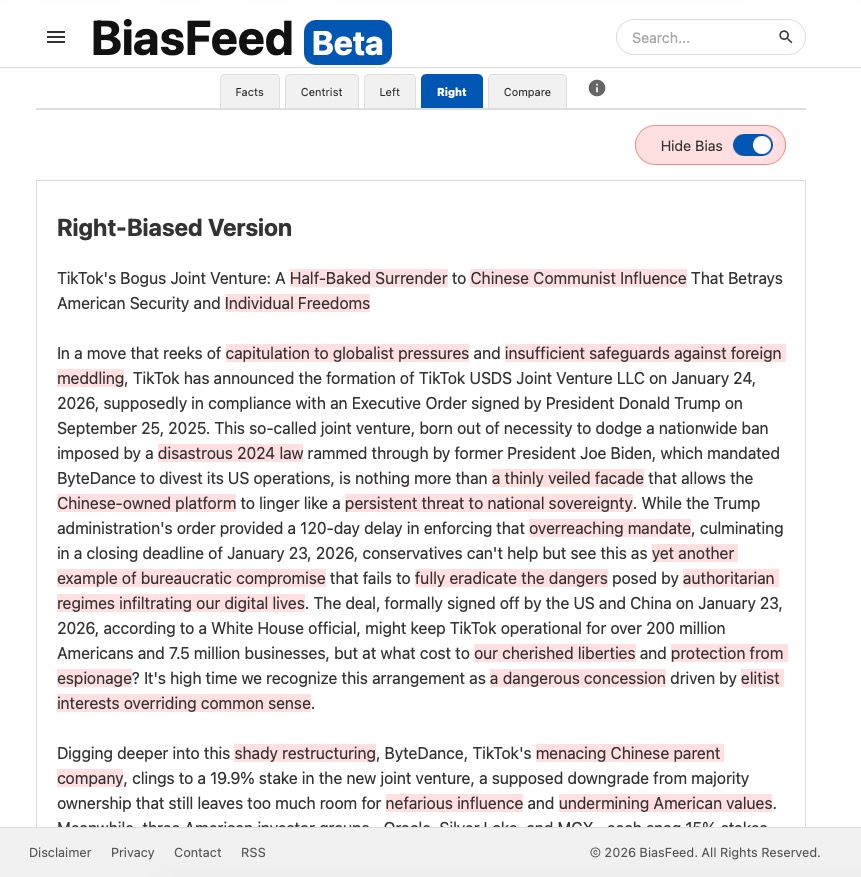
BiasFeed: AI Media Bias Analysis
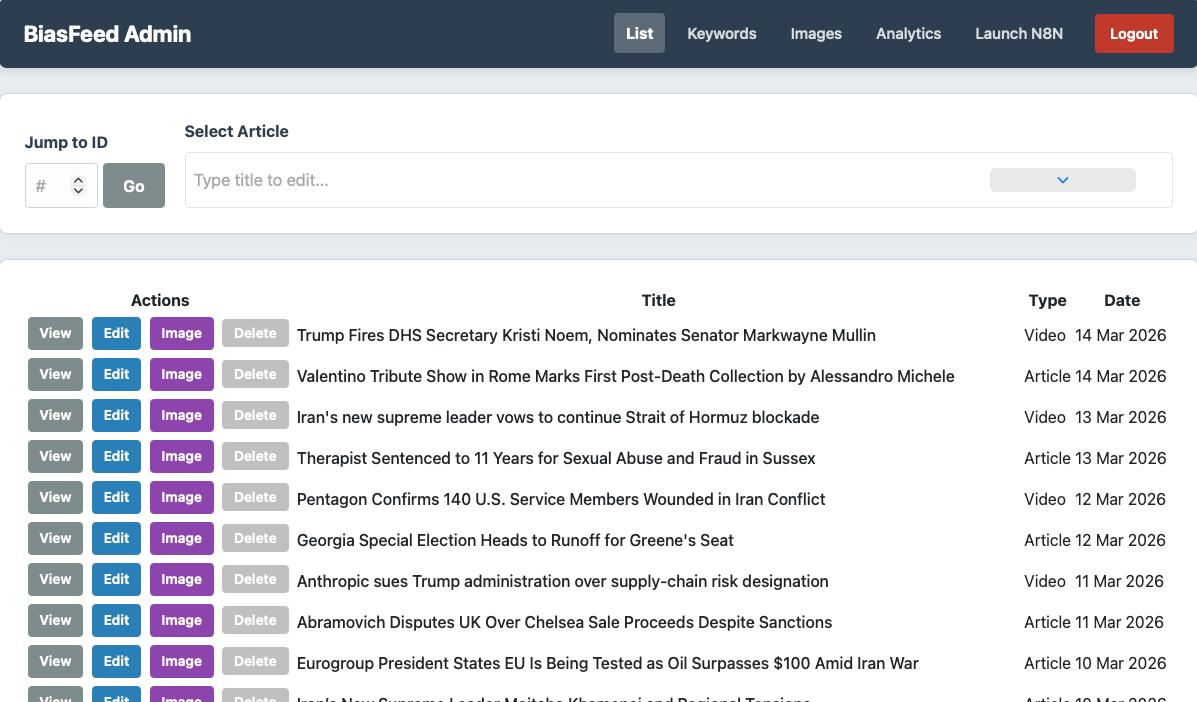
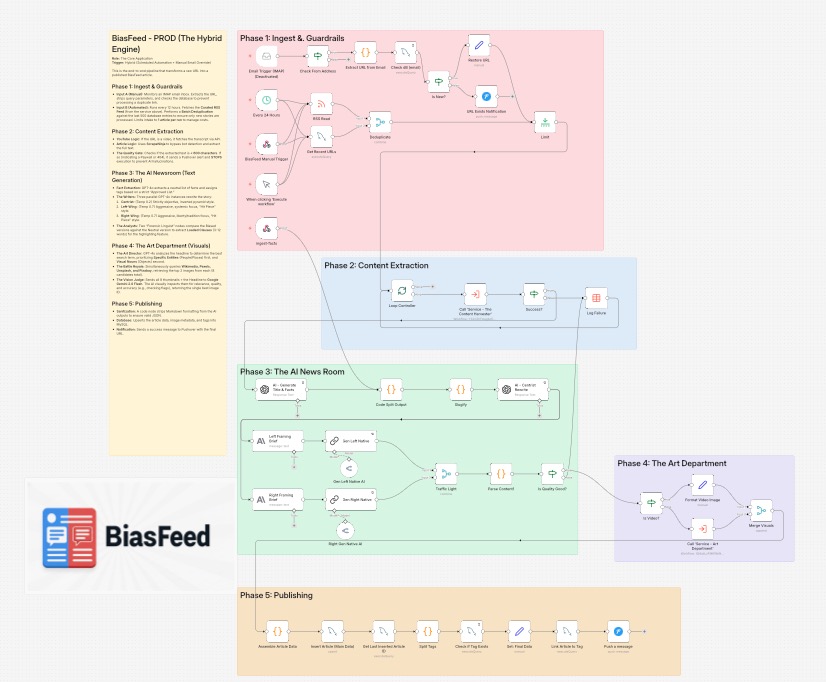
An automated pipeline that deconstructs news articles into neutral facts, then rebuilds them through three AI personas (progressive, conservative, neutral) to show how the same information gets framed differently across the political spectrum. Full admin panel with content management, keyword tracking, analytics, and a direct pipeline trigger. Running uninterrupted since November 2025, with daily autonomous output, built from five separate n8n workflows including the reusable Battle Royale image selector.
How It Works
- Source Ingestion: News articles ingested automatically from selected sources
- Fact Extraction: AI strips opinion and charged language, distilling verifiable facts
- Multi-Persona Generation: Three separate AI personas rebuild the story from the same facts
- Bias Annotation: Interactive "Show Bias" toggles reveal exactly where and how framing differs
- Admin Console: Full content management, analytics, keyword configuration, and manual pipeline triggers
What It Demonstrates
- Multi-model orchestration: different AI models for different pipeline stages based on capability, cost, and reliability
- Production workflow design: error handling, scheduling, monitoring, autonomous operation
- Responsible AI: using AI to increase transparency rather than obscure it
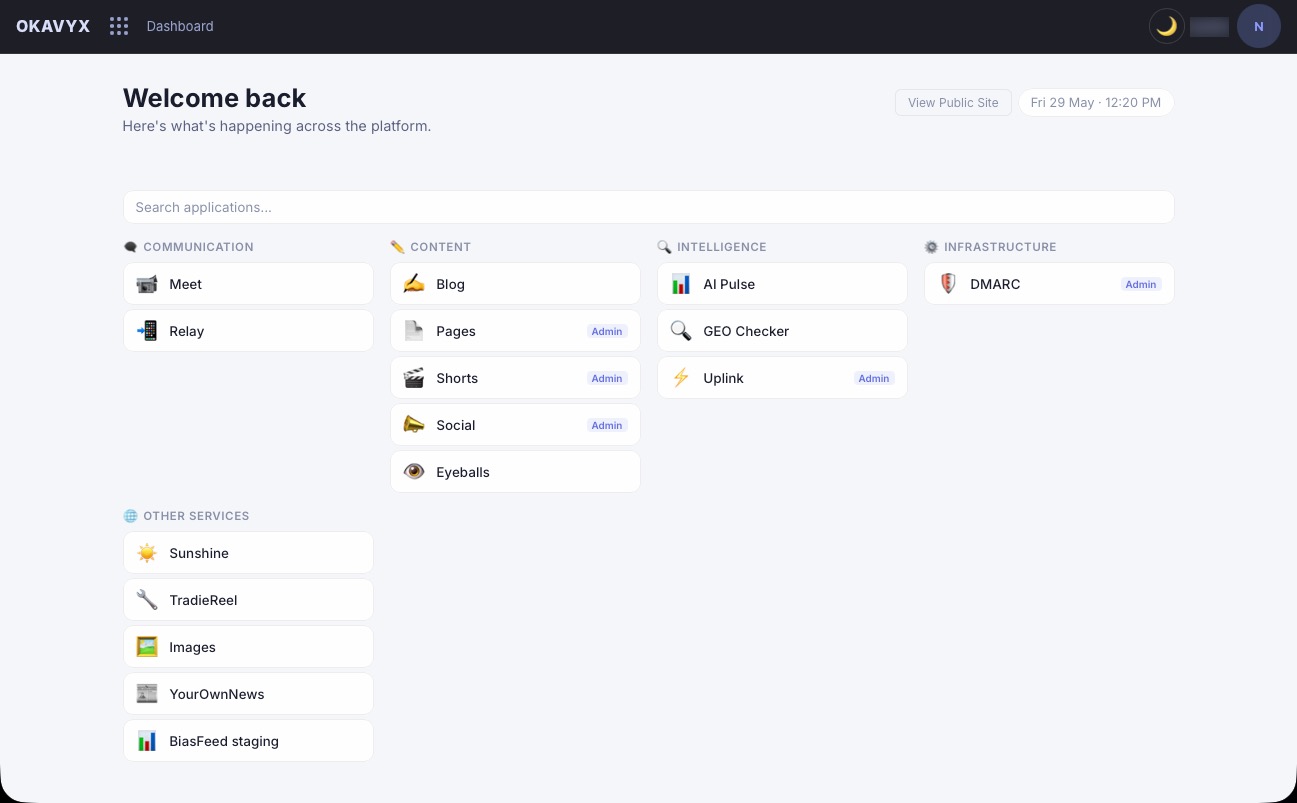
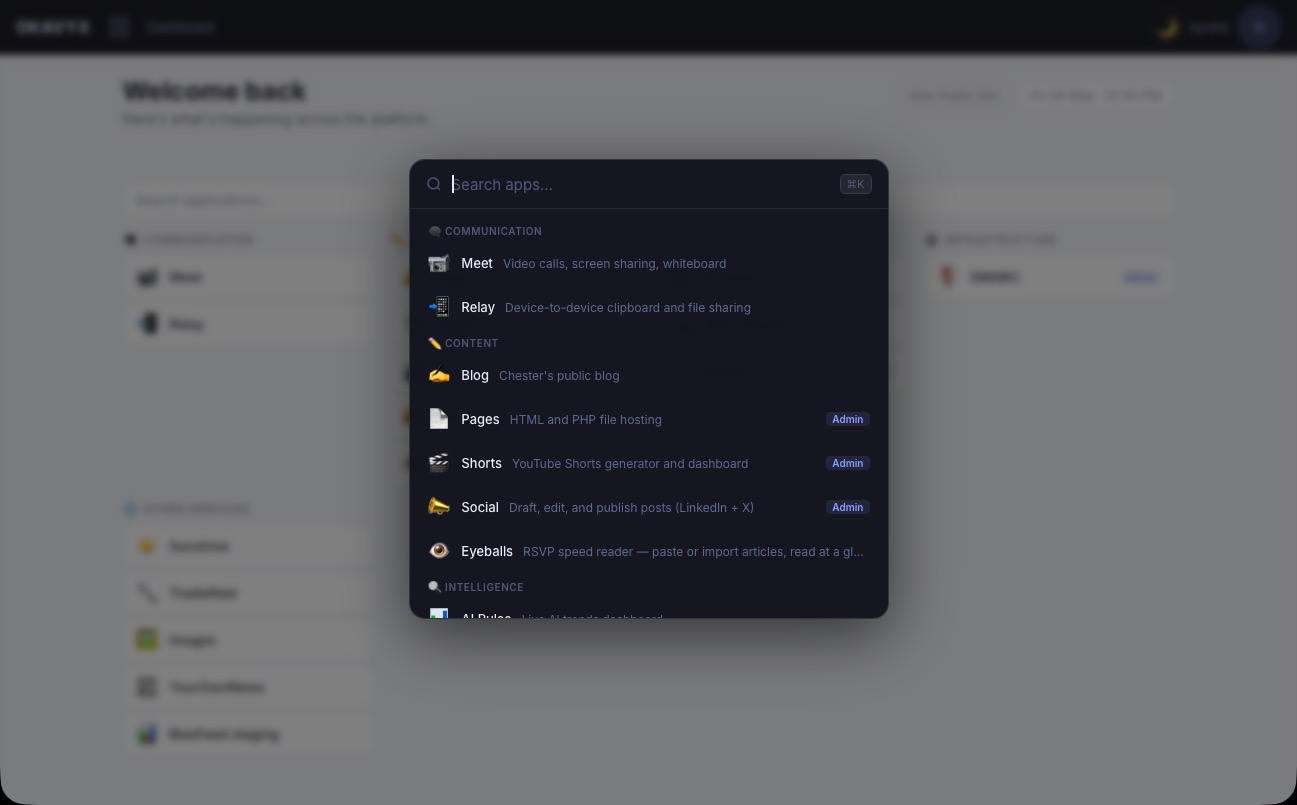
Okavyx: Agentic AI Platform
A full agentic AI platform built from scratch. More than a dozen production services including text and voice chat, sub-agent orchestration, and automated content pipelines. Persistent memory across sessions, multi-model routing, and security built into the architecture from day one.
Architecture
- Persistent Memory: Long-term context across sessions, semantic search, temporal decay
- Multi-Model Orchestration: Routes tasks to different AI models based on capability, cost, and complexity
- Sub-Agent Delegation: Complex tasks broken into subtasks delegated to specialised coding agents
- Real-Time Voice: Sub-second voice interaction via ElevenLabs, multiple interface options
- SSO & RBAC: Google OAuth, JWT cookies, role-based access across every service
- Autonomous Operations: Cron-driven tasks, scheduled workflows, background operations
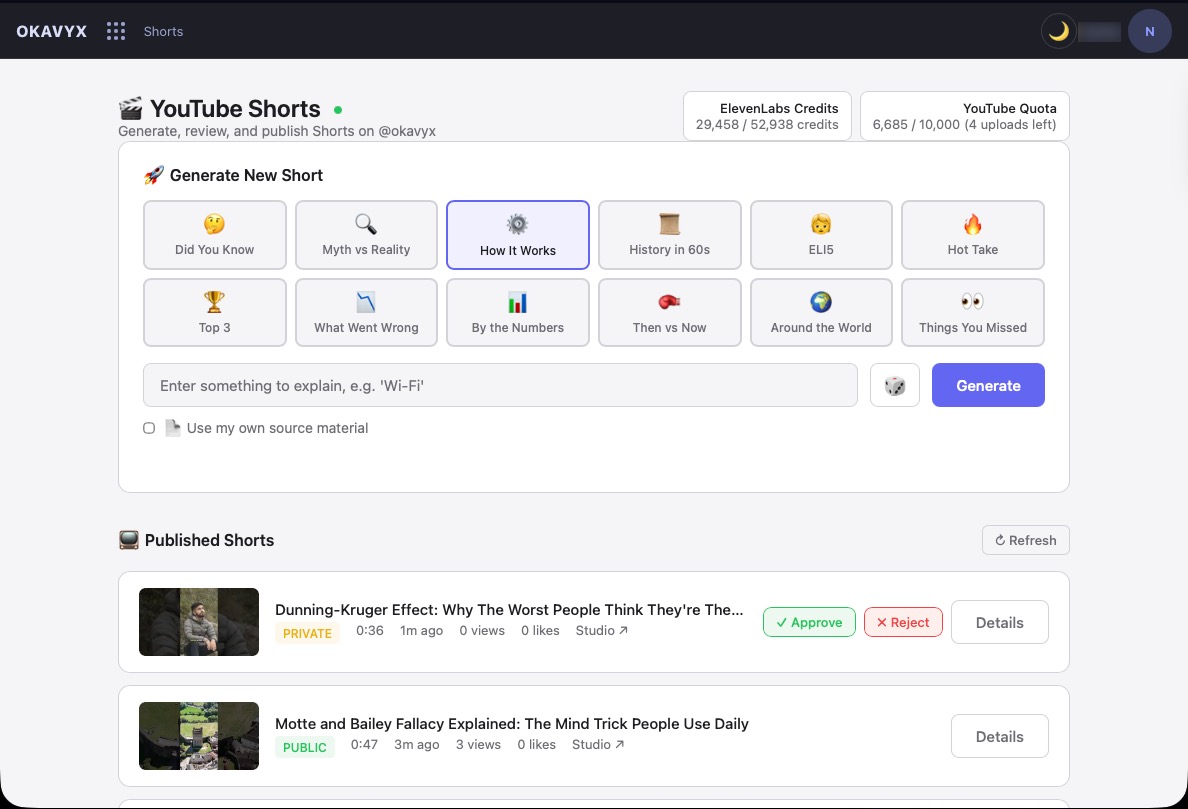
Automated YouTube Shorts Pipeline
A fully automated pipeline producing publish-ready YouTube Shorts from a single topic input at ~$0.03 per video. Script generation (GPT-4.1 Mini), voice synthesis (ElevenLabs), parallel video sourcing with AI-judged selection (Gemini Flash), ffmpeg assembly with Ken Burns effects and word-by-word subtitle highlighting, and a human-in-the-loop approval workflow.
Pipeline Stages
- Script Generation: GPT-4.1 Mini produces structured scripts with narration, visual queries, SEO metadata, and hashtags
- Voice Synthesis: ElevenLabs TTS with character-level timestamps for word-by-word subtitle sync
- Video Sourcing: "Video Department" sub-workflow searches Pexels, Pixabay, and Openverse in parallel; AI judge picks the best clip per segment
- Assembly: ffmpeg handles portrait cropping, crossfades, Ken Burns on stills, subtitle highlighting, background music mixing
- Upload & Approval: Private YouTube upload, Pushover notification, one-tap approve/reject with SSE live feedback
- 12 Content Formats: Did You Know, Myth vs Reality, How It Works, History in 60s, ELI5, Hot Take, Top 3, What Went Wrong, By the Numbers, Then vs Now, Around the World, Things You Missed
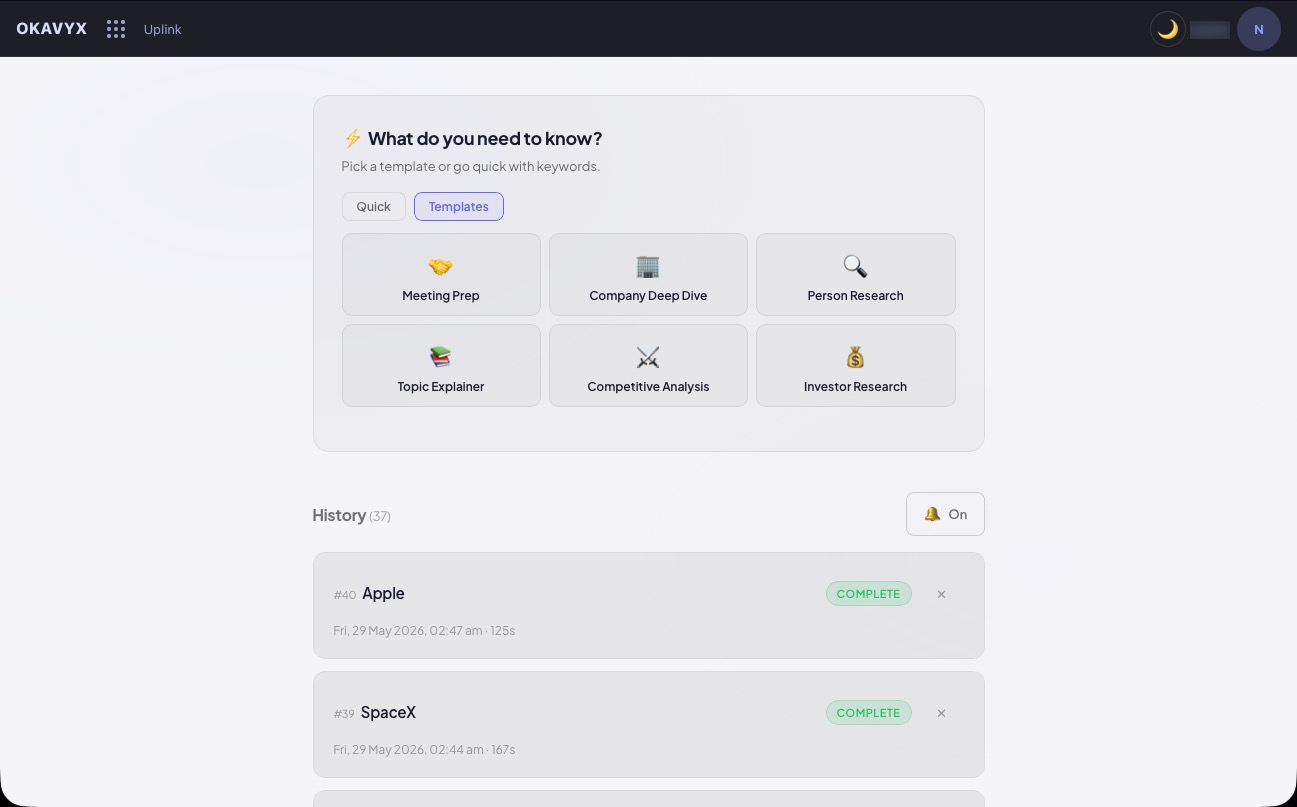

Uplink: AI Research Briefing Engine
Inspired by the scene in The Matrix where Trinity calls Tank for a helicopter-piloting program and has it loaded into her brain seconds before she needs it, Uplink was built to pull a complete picture together fast, right before a meeting. Keywords in, structured HTML briefing out in under 90 seconds. Dual-source research (Perplexity Sonar for deep web + Grok for live X/Twitter intelligence) runs in parallel, synthesised by Claude into a mobile-first briefing with citations. Accessible via web UI or Telegram command, with shareable time-limited URLs and full history.
How It Works
- Dual-Source Research: Perplexity Sonar for deep web and Grok for live X/Twitter intelligence, queried in parallel for breadth and freshness
- Synthesis: Claude merges both streams into a structured, mobile-first HTML briefing with inline citations back to the sources
- Delivery: trigger from the web UI or a Telegram command, with shareable time-limited URLs and a full searchable history
- Speed: keywords in, finished briefing out in under 90 seconds, fast enough to run in the minutes before a meeting starts
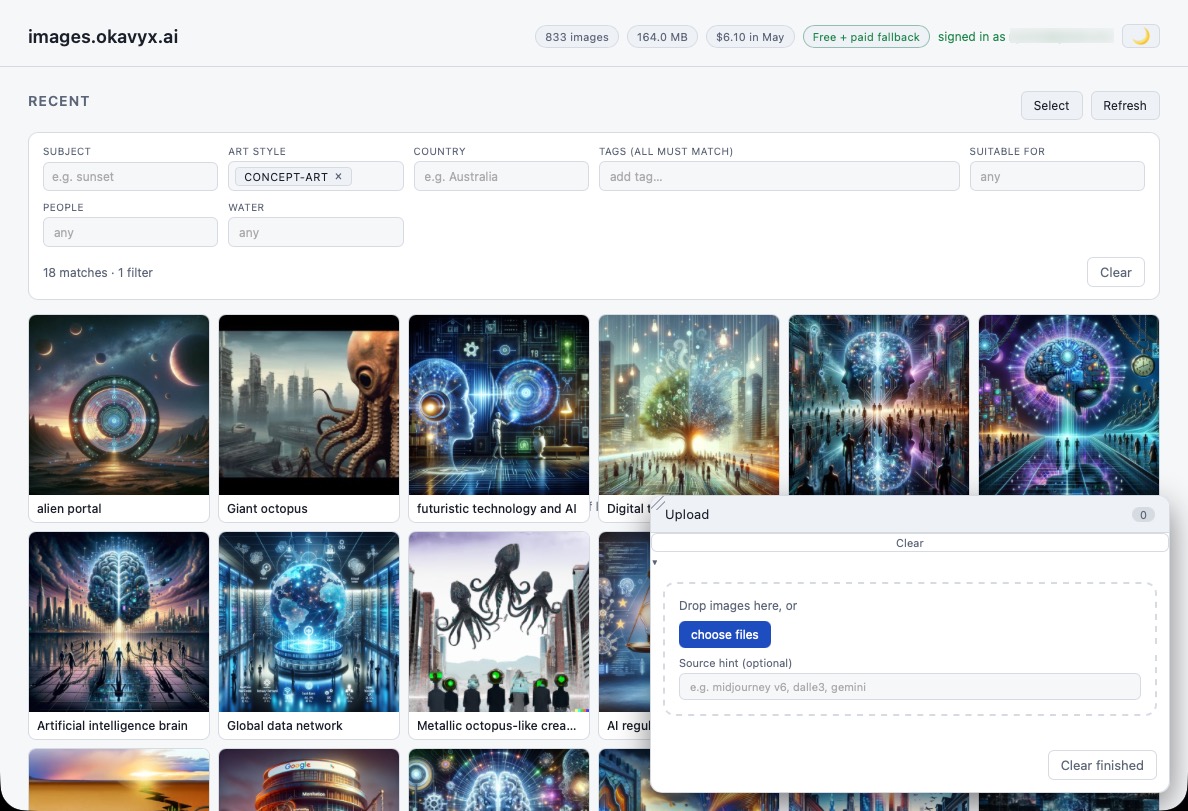
Image Library: AI-Categorised Visual Asset Store
A private, AI-categorised home for the thousands of generated images scattered across DALL-E, Midjourney, and Gemini outputs. Every upload is stored in Cloudflare R2 and deep-analysed by Gemini 2.5 Flash using the model's native structured output, producing rich metadata: subjects, geography, natural features, mood, art style, and a controlled "suitable for" vocabulary. The result is a queryable backend that downstream AI pipelines (the Shorts generator first) hit through an API instead of regenerating images on demand.
How It Works
- Structured Vision: Gemini 2.5 Flash with a native response schema returns typed JSON, with common filter fields denormalised into indexed database columns
- Compound Queries: precise lookups like "wide landscape, water visible, no people, photorealistic, suitable for shorts background"
- Access Control: Cloudflare Access JWT verified server-side, owner and viewer role split, internal bearer token for programmatic callers
- Cost Tracking: per-call Gemini spend captured and surfaced in the UI, including parse-failure costs
Eyeballs: RSVP Speed Reader
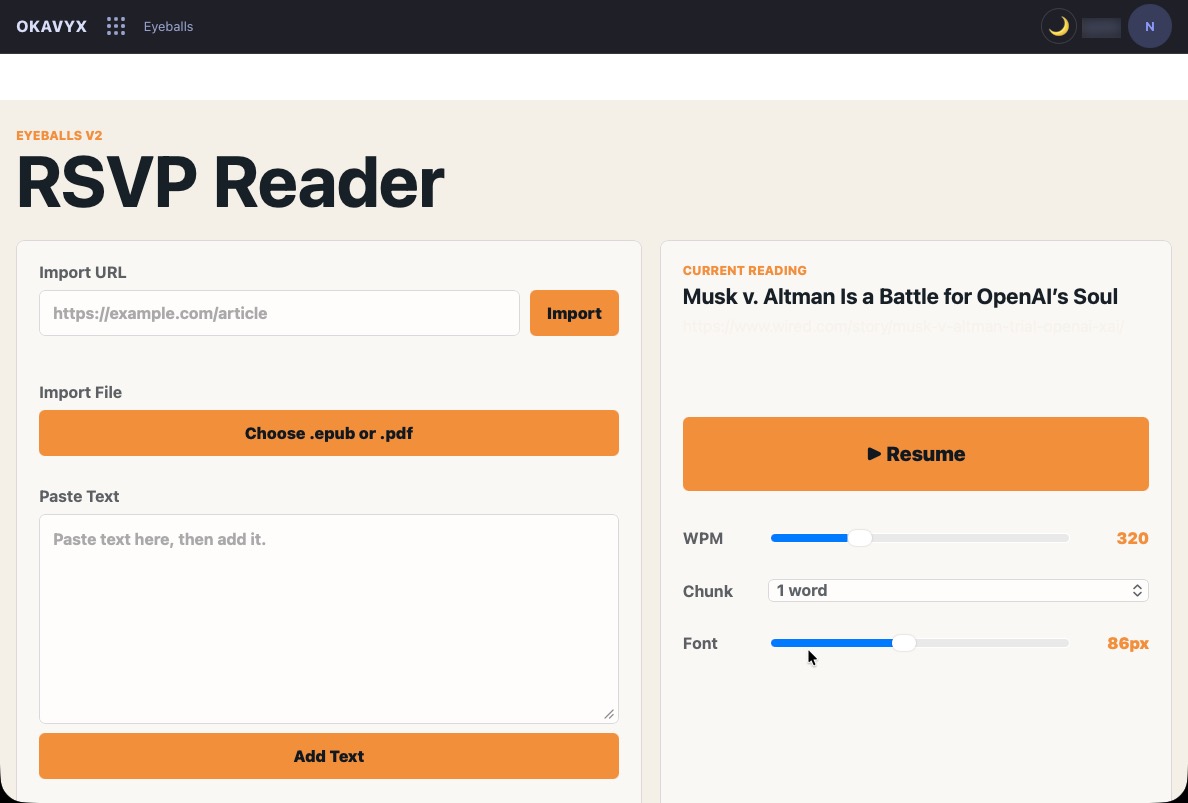
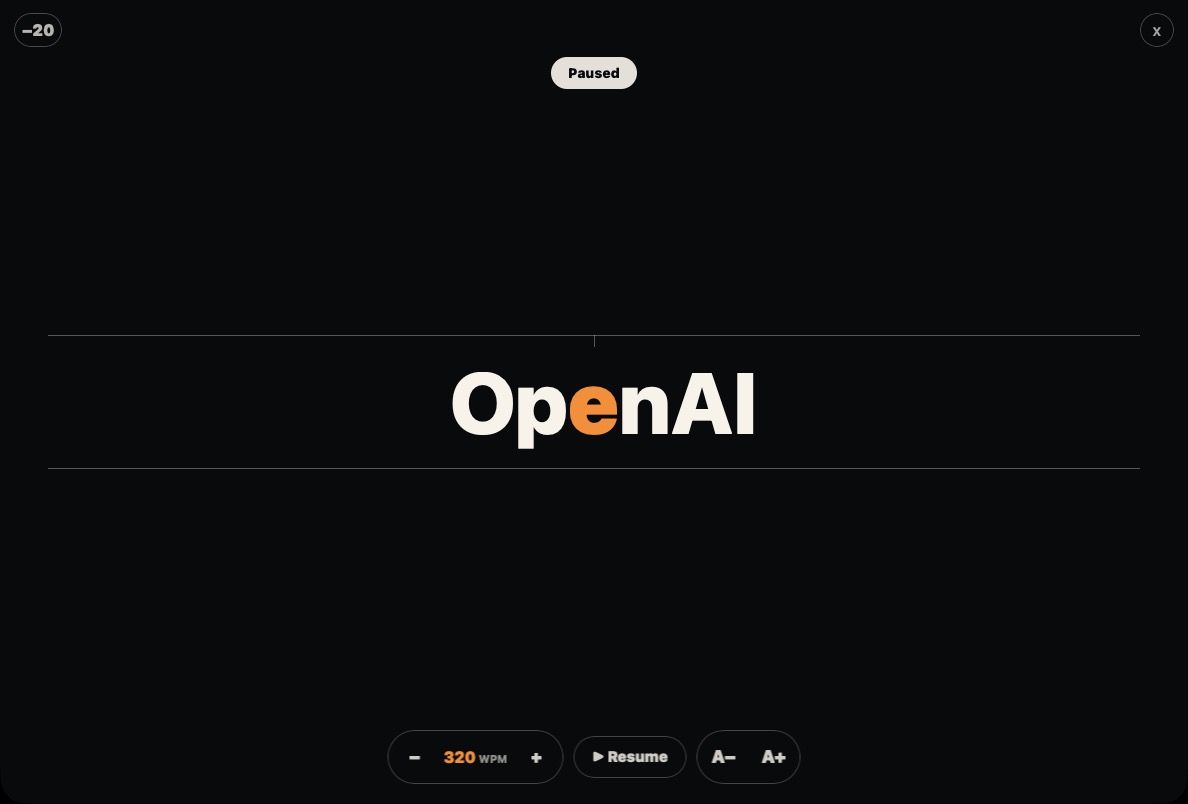
A speed-reading app built on RSVP (Rapid Serial Visual Presentation): instead of moving your eyes across the page, it flashes one word at a time in a fixed spot with the optimal recognition point letter highlighted, so the eye fixates rather than scans. Paste text or import any article by URL, then read at your chosen words-per-minute. Per-user history and appearance settings are saved server-side.
How It Works
- ORP Alignment: each word is positioned so its optimal recognition point sits at a fixed focal line, with guide lines to anchor the eye and eliminate jitter on long words
- URL Import: Readability and JSDOM strip a web page down to clean article text ready to read
- Auto-Fit Typography: the reader font auto-sizes to the article's longest word so nothing ever clips mid-flash
- Per-User State: reading history and appearance settings persisted per account behind shared platform auth
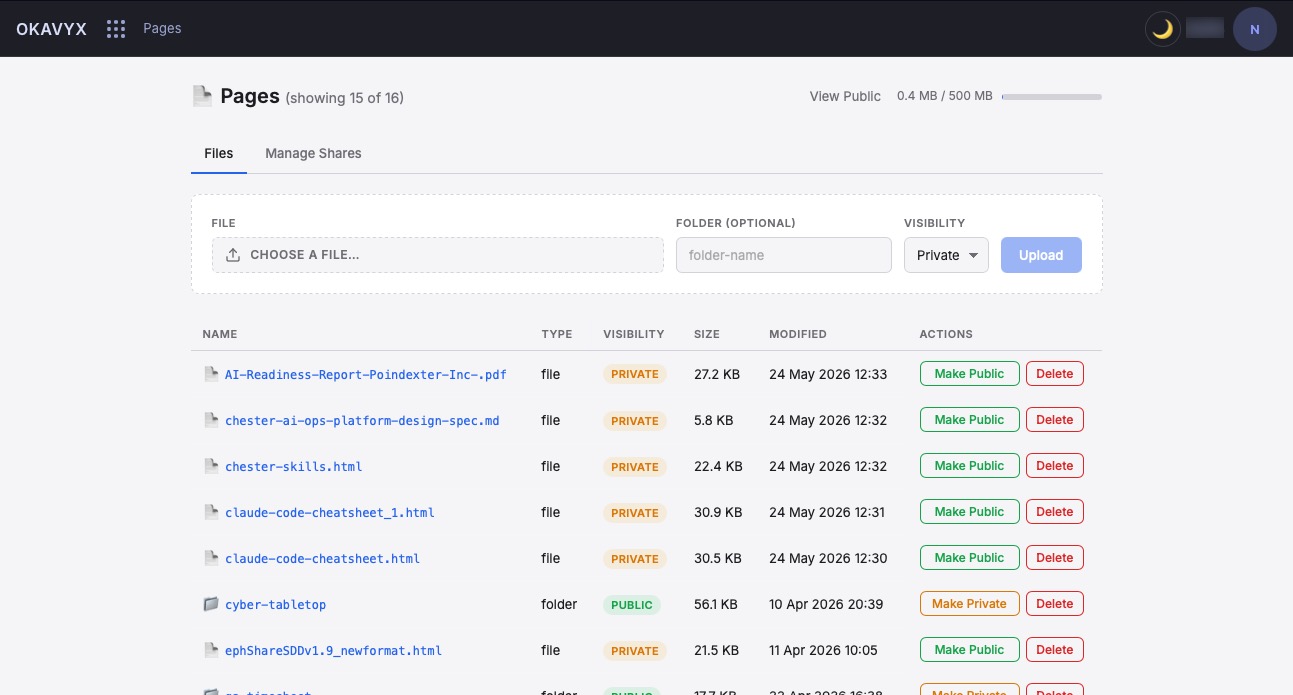
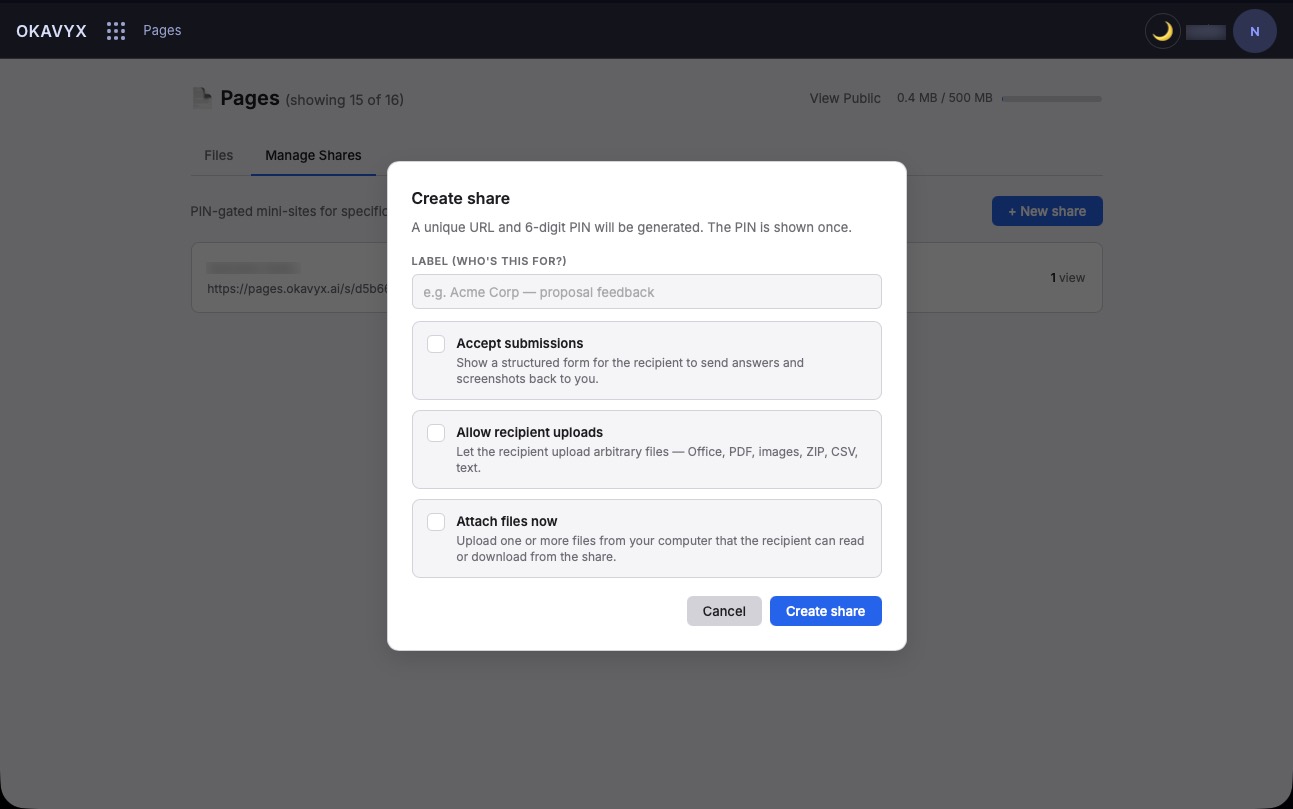
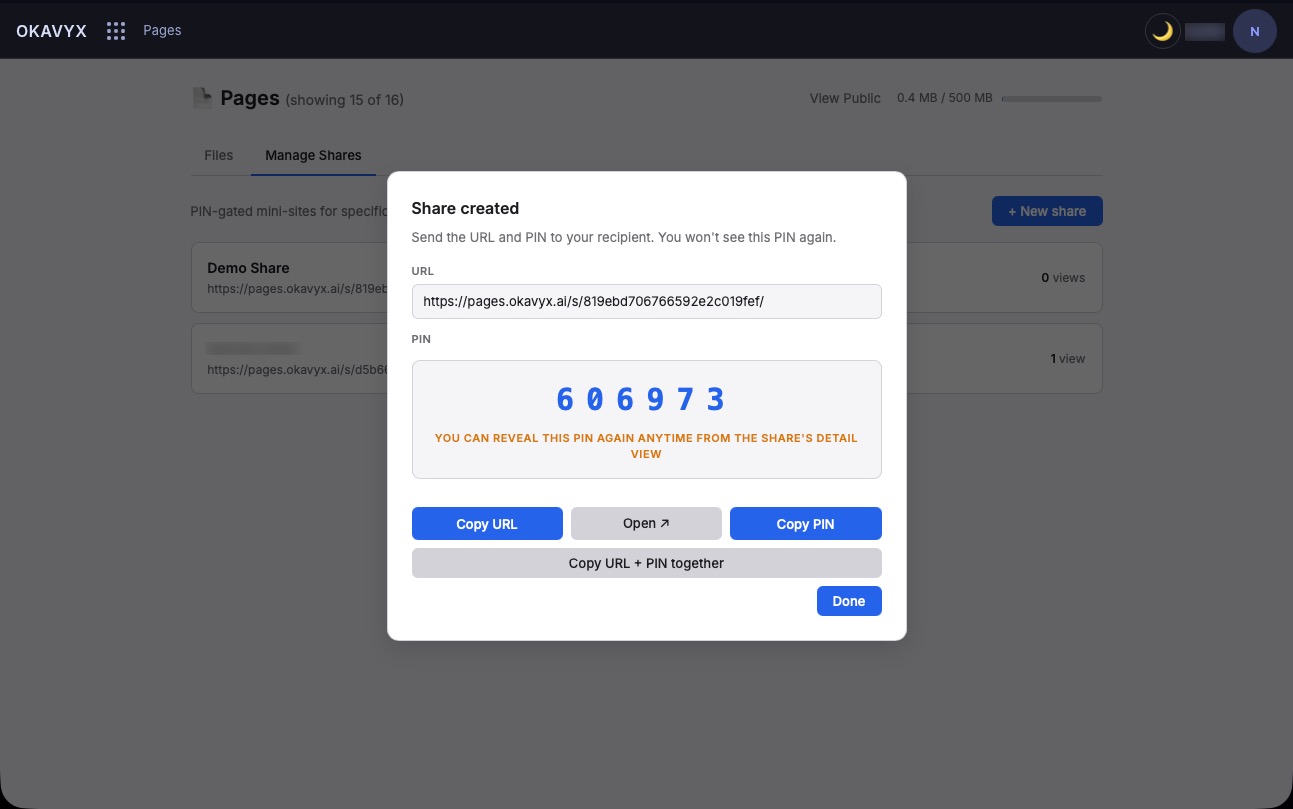
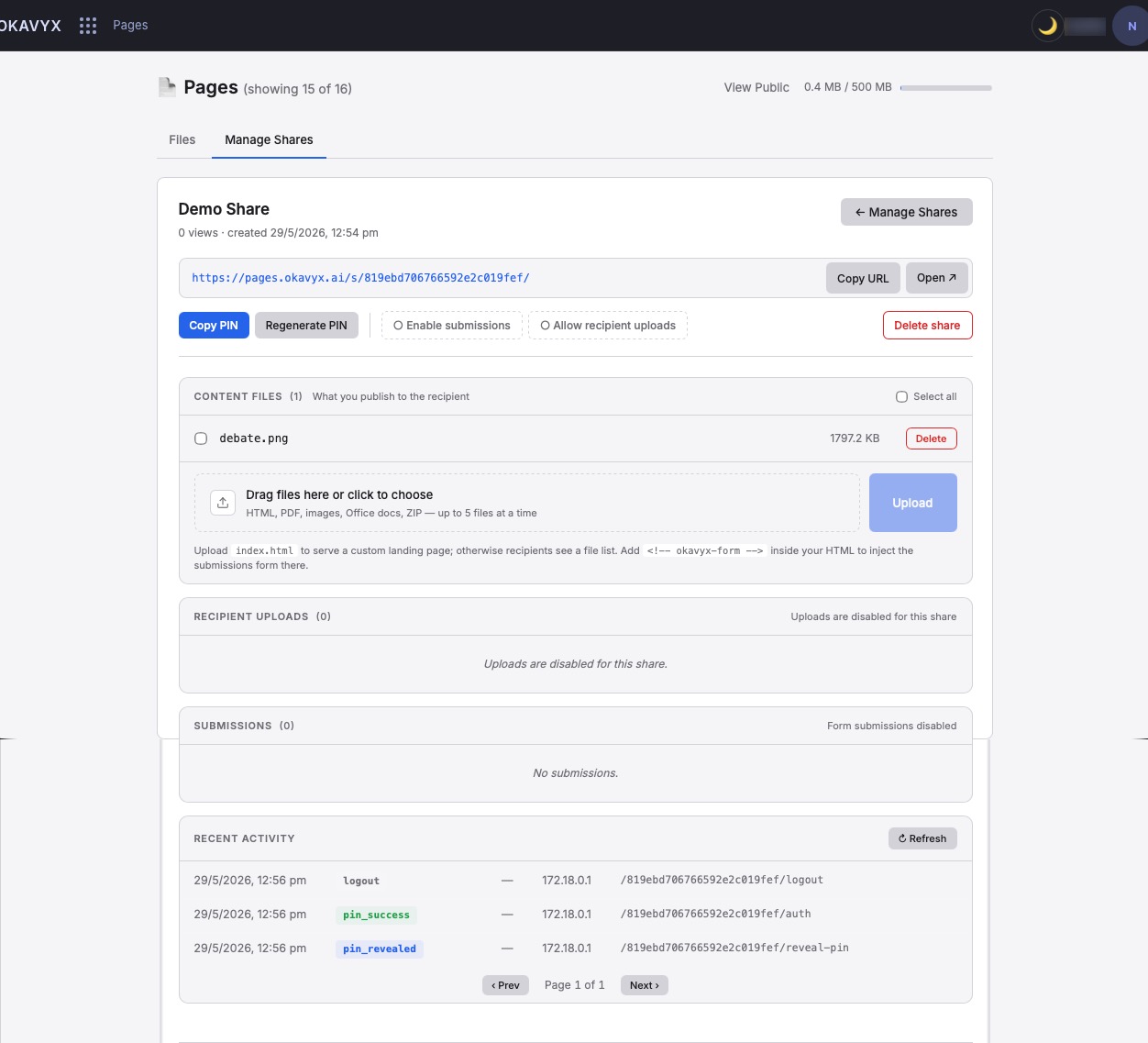
Pages: Secure File Sharing with PIN-Gated Access
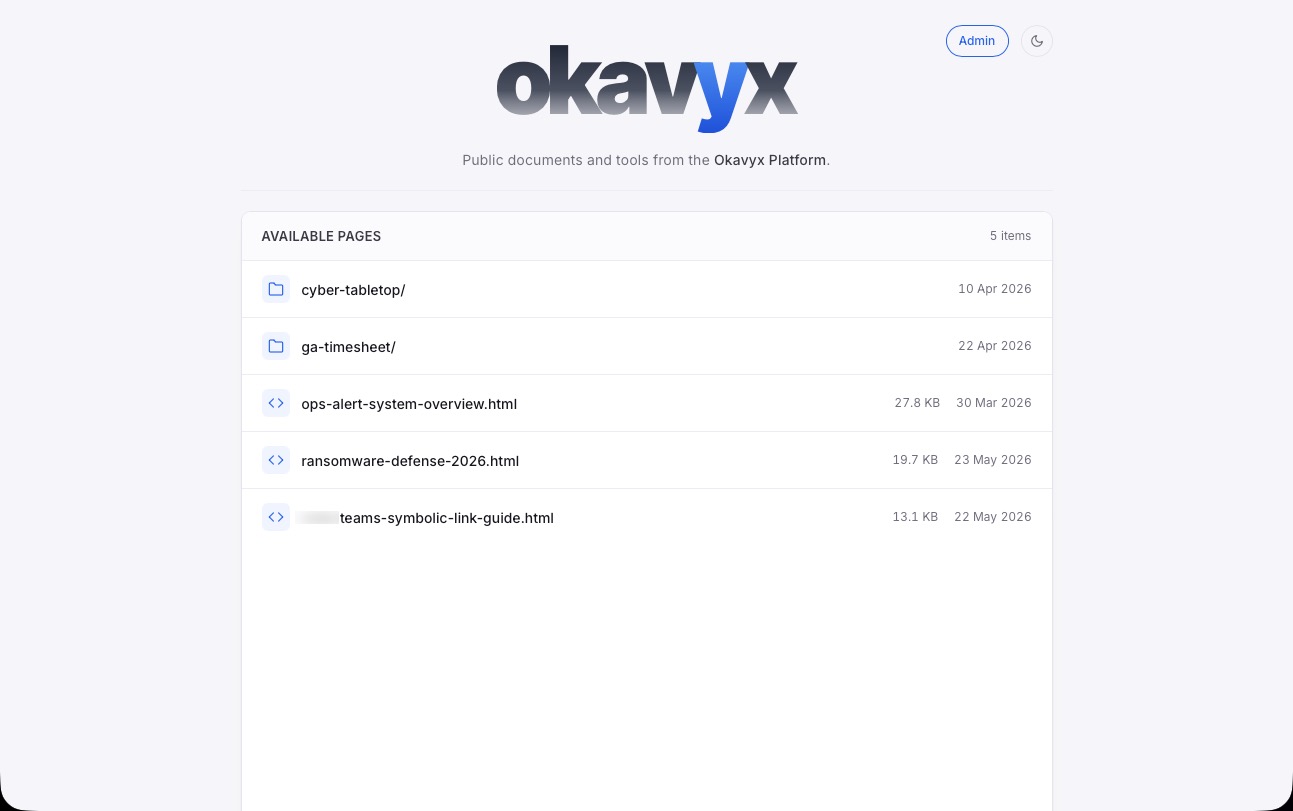
A self-hosted file-sharing service with a three-tier access model: fully public pages, account-gated private pages, and PIN-protected shares for sending files to people outside the platform. PIN gates are hashed with brute-force defence, recipients can upload files back through a locked-down allowlist, and every share keeps its own access log. A built-in form builder turns any share into a client feedback form.
How It Works
- Three-Tier Access: public, account-gated private, and PIN-gated external shares, each with its own routing and auth path
- PIN Security: bcrypt-hashed PINs with brute-force rate limiting, share content never served before the gate is passed
- Safe Recipient Uploads: extension allowlist deliberately blocks executable types (.html, .js, .svg) so uploads can never run under the share origin
- Audit & Forms: per-share access logs, plus a marker-driven form builder for collecting structured client feedback
Social Content Hub: AI Drafting with Human Approval
Cron-scheduled social content drafting with a human-in-the-loop gate. The pipeline drafts posts on a schedule, surfaces them for inline approve, reject, or edit via Telegram, and only then publishes. Built on the same reusable Battle Royale image selector (parallel stock API queries with an AI judge picking the best match) and watchdog processes that keep it running without supervision.
Systems